
Last updated November 24, 2026
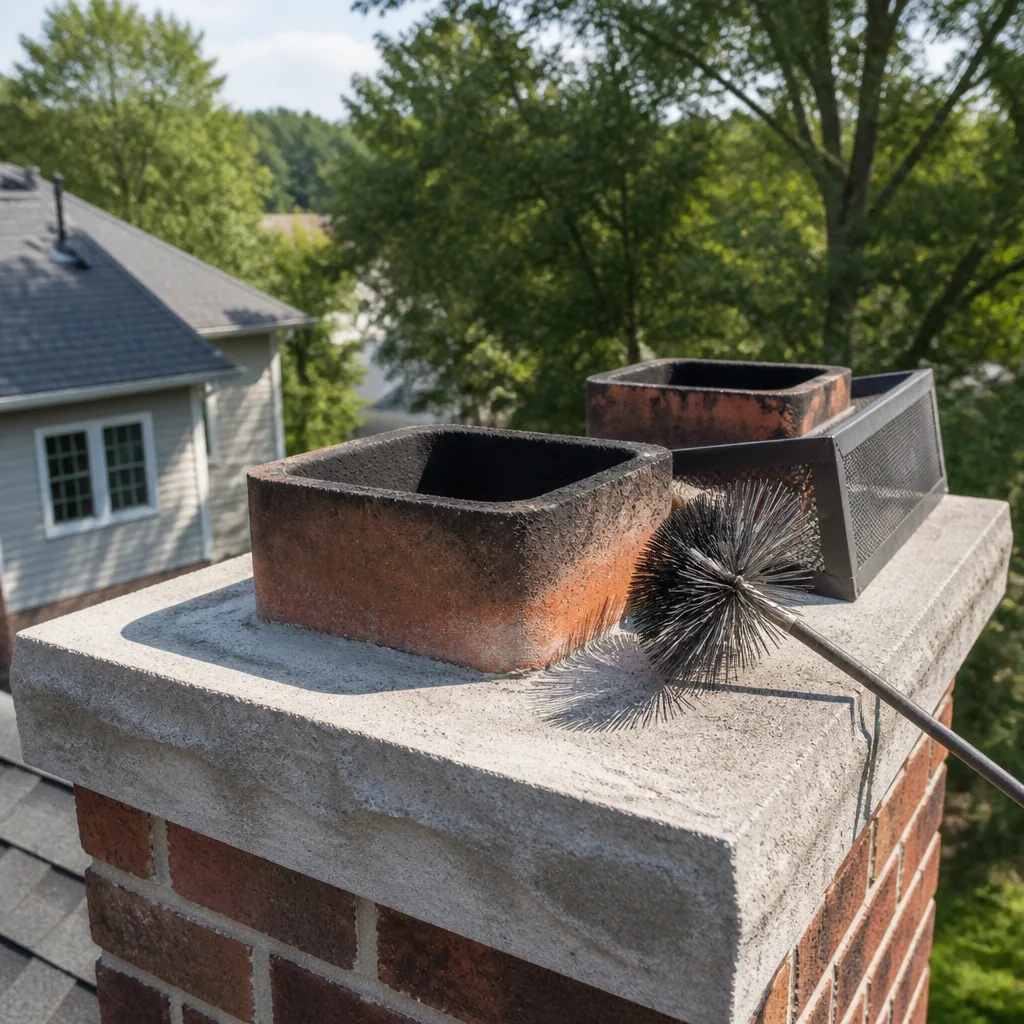 Sweep & inspection
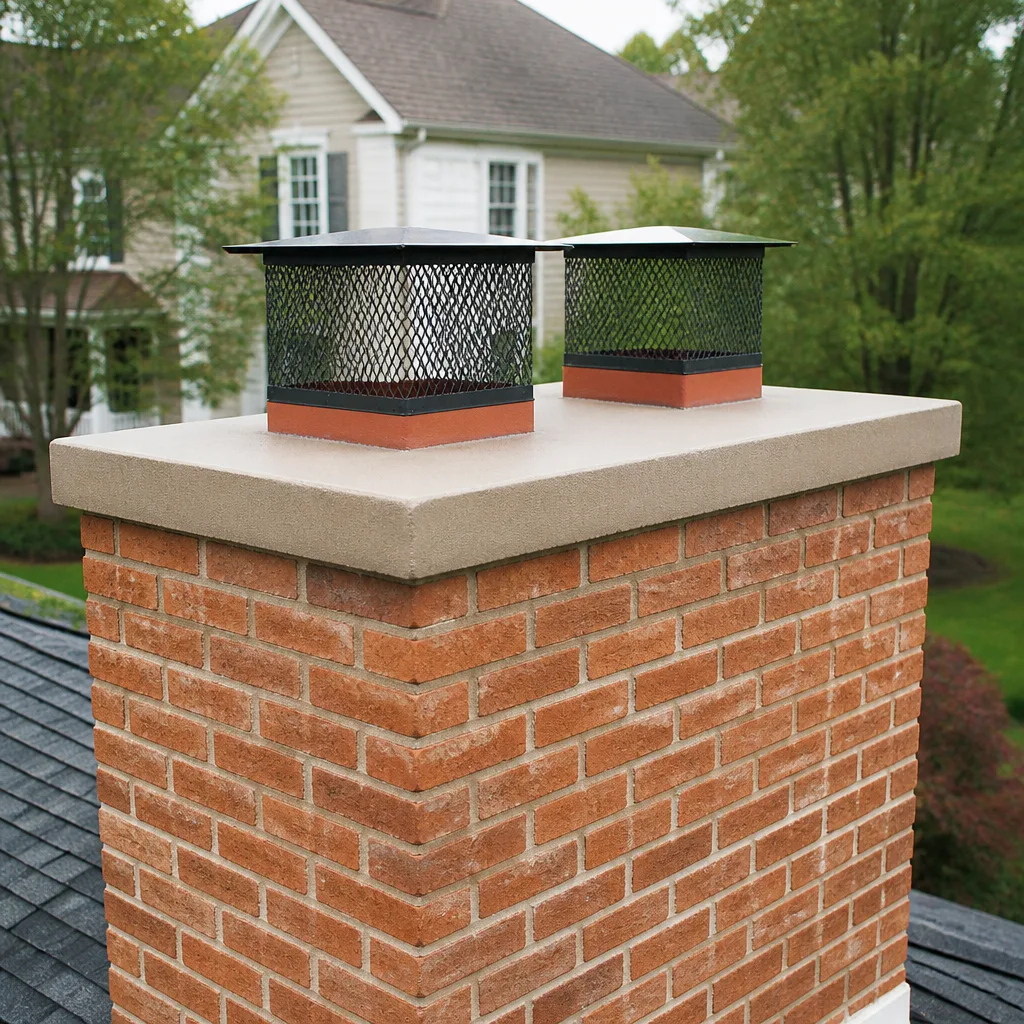 Caps & crowns
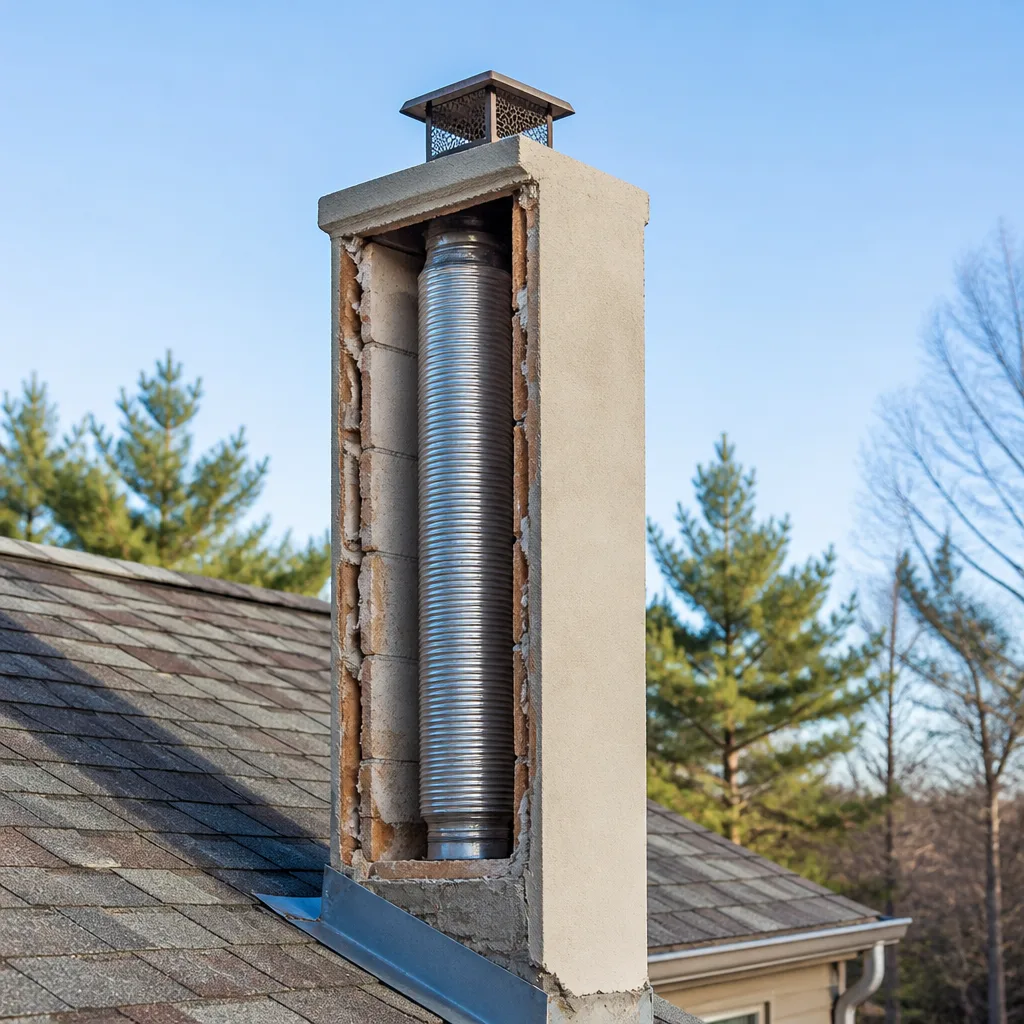 Flue relining
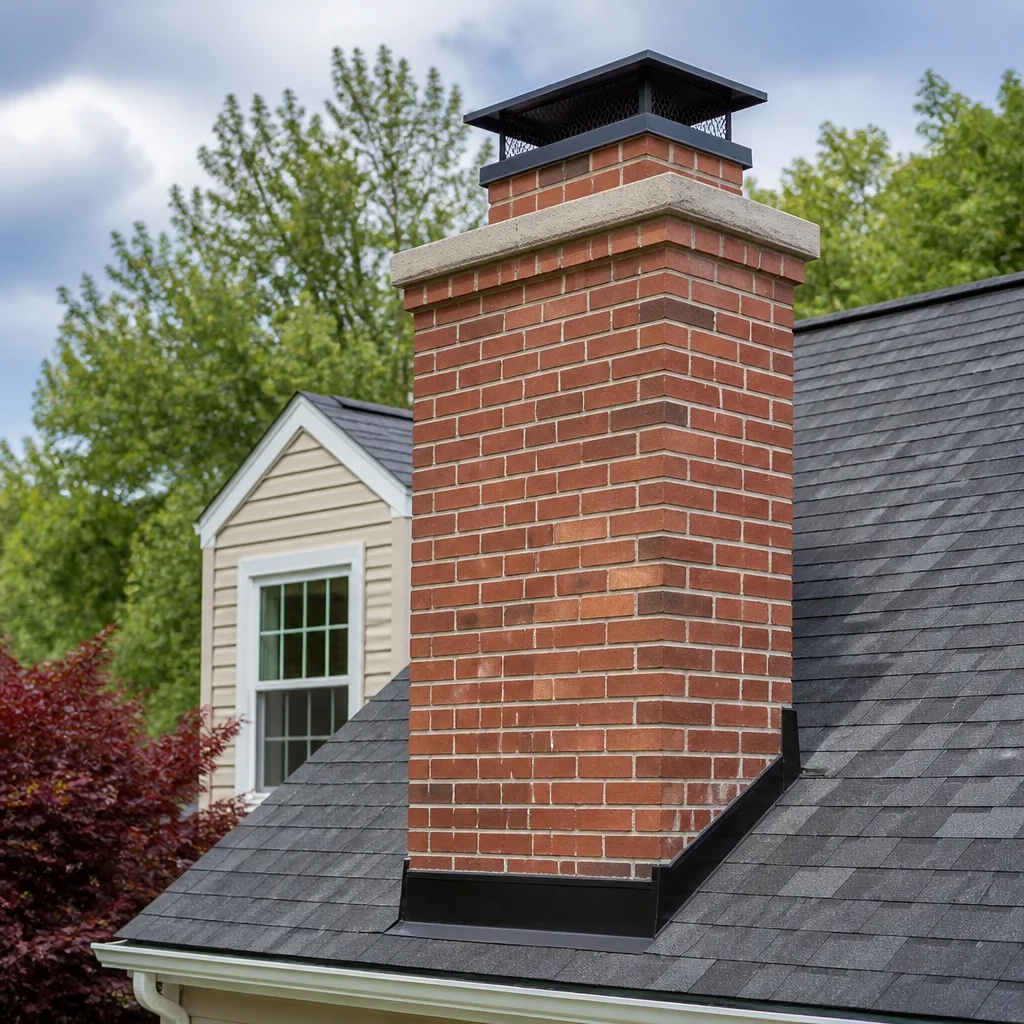 Masonry repair
 Gas fireplace service
Level 1 sweep and inspection to the NFPA 211 annual standard - flue, crown, cap, and flashing checked and photographed
Chimney sweep logs do not sweep chimneys. They loosen some creosote - which then falls where a brush and vacuum still have to collect it.
DIY vs Professional Chimney Cleaning: The Plaza Midwood Homeowner’s Decision Guide
Here’s the part most cleaning guides get wrong: the debate isn’t about whether you can physically push a brush up a flue. You can. The debate is about what happens after the soot is gone. A homeowner with a consumer brush kit removes what they can see and feel, then hangs the tools back in the garage with no new information about the liner, the smoke chamber, the flashing, or the crown. In Plaza Midwood’s older bungalows and four-squares, that missing information is the whole point. This guide draws a clean line between what a homeowner can legitimately handle and where DIY stops being safe, based on the actual anatomy of a chimney rather than homeowner anxiety.
Quick Answer
A homeowner can safely handle ash removal, clearing the cap and screen, exterior visual checks, and confirming the damper opens and closes. Sweeping the flue and confirming the liner is sound is professional work, because it needs a properly sized rotary brush, a sealed vacuum, and a video camera to see what the brush can’t. If your Plaza Midwood home has never been camera-inspected, a DIY clean tells you nothing about whether it’s safe to burn.
Styles & brands we work with
- Sweep & inspection
- Caps & crowns
- Flue relining
- Masonry repair
- Gas fireplace service
Table of Contents
- Where DIY Ends and Professional Work Begins
- What a Homeowner Can Legitimately Do (With Correct Technique)
- What Requires Professional Equipment
- The Specific Risks of DIY in Older Plaza Midwood Housing Stock
- What a Proper DIY Attempt Actually Costs
- The Diagnostic Gap: What a Clean Doesn’t Tell You
- Creosote Stages and Why They Matter More Than Soot Volume
- When to Call a Professional
Where DIY Ends and Professional Work Begins
The honest dividing line runs through the word “cleaning.” If your goal is removing soot from a masonry flue, a homeowner can do that on an intact, lined, well-maintained chimney with a proper brush. If your goal is confirming your chimney is safe to operate, that’s no longer cleaning. That’s inspection, and inspection is what separates a sweep who owns a camera from a homeowner with a rod set.
Consumer chimney brush kits are dimensioned for the two flue sizes that dominate newer construction: 8×8 and 8×13. In Plaza Midwood, a lot of the housing went up before those standards took hold. Bungalows and four-squares built in the early decades of the last century often have flues that aren’t square, aren’t uniformly dimensioned, or were lined with clay tile that has since cracked and slumped. A brush sized for a standard flue forced through a non-standard one scrubs the mortar joints harder than the flue can take. It doesn’t clean better; it accelerates damage.
So the line is not “brush in hand or not.” The line is:
- Maintenance touches: home territory when the chimney is known to be sound.
- Flue cleaning: possible to do badly, best done by whoever will also look up the flue with a camera afterward.
- Diagnosis: professional, full stop.
We phrase it that way because a lot of homeowners come to us having already done their own cleaning for years and feeling fine about it. Then the camera goes up and shows a hairline liner crack at the smoke chamber transition that a brush could never reveal. That’s not a homeowner failure. It’s a tooling gap.
What a Homeowner Can Legitimately Do (With Correct Technique)
There’s real work that belongs to you, and doing it properly makes the professional visit more effective rather than replacing it. Here’s the short list with the technique that actually matters:
- Ash removal. Wait until the firebox is cold, not just out. Scoop into a metal container with a lid, never a plastic bucket or a paper bag, and set the container on a non-combustible surface outside for a couple of days before disposal. Ash holds embers far longer than people expect. Leave a thin bed of ash on the firebox floor; it helps the next fire burn cleanly.
- Cap and screen clearing. From the ground with binoculars, or from a ladder you’re comfortable on and the roof pitch allows. Summer storms drop enough debris in Plaza Midwood’s tree canopy that screens breed blockages. Clear leaves and twigs off the mesh with a stiff brush. If the cap is loose, dented, or the mesh is torn, don’t fix it yourself; that’s cap work, and a poor fit is worse than a missing one.
- Damper operation. Open and close it by hand, feel for a smooth travel, and check it seats flush. A damper that sticks or won’t seal is a sign the smoke chamber is warped or creosote-obstructed. Stop there and get a professional look.
- Exterior visual inspection. Walk the perimeter at ground level. Note cracks in the masonry, white staining (efflorescence), moss growth, and any chimney that visibly leans. These are the early weather signals, and only an inspection resolves what they mean.
That’s the entire safe scope. Any cleaning of the flue itself sits outside it because you can’t reach the flue interior to gauge its condition, and any high chimney work involves real fall risk. If you’re using a fireplace regularly and want the rest of the maintenance handled alongside a proper look, our chimney sweep service covers cleaning plus the camera inspection that goes with it.
What Requires Professional Equipment
Three jobs demand equipment a homeowner won’t reasonably own, and each one exists for a specific reason.
Rotary cleaning systems for stubborn creosote
A hand brush glides through light soot and Stage 1 creosote. Stage 2 creosote is glazed, hard, and bonded to the flue; a hand brush skates over it. Professionals use rotary systems with appropriately sized poly or wire heads run at controlled speed, paired with a HEPA vacuum at the firebox to capture the dust. Getting this wrong at home means loosening glaze without capturing it, which puts the debris into the room you’re standing in.
Video liner inspection
A smartphone on a string will show you a blurry gray tube. A proper camera system gives a color, lit, articulated view of the entire flue length, including the transitions where cracks actually form, the smoke chamber shelf, and the top of the flue. Without that view, no one knows whether the flue is sound or whether it merely looks sound from below. The video is the evidence a real recommendation rests on.
Smoke chamber parge assessment
The smoke chamber, the corbelled transition above the damper, is where creosote builds in ledges and where failed parge coat sends fire against unprotected masonry. Assessing it means seeing it, and repairing it means resurfacing it with a ceramic material formulated for the job. When resurfacing is warranted, we use HeatShield, a recognized ceramic resurfacing method in the trade, because it restores the flue interior without demolition. That assessment comes first, and it’s the difference between a proper repair and a guess.
The Specific Risks of DIY in Older Plaza Midwood Housing Stock
Plaza Midwood’s charm is its pre-war and mid-century housing, and those homes carry chimney problems newer builds rarely have. Three of them show up repeatedly.
Unlined flues. A surprising number of older homes were built with brick chimneys and no clay tile liner. An unlined brick flue has mortar joints as its only barrier between creosote and the surrounding structure. Brushing an unlined flue aggressively means loosening the very mortar that’s holding it together. This is the single biggest reason a consumer brush kit, sized for a lined flue, is the wrong tool in an unlined one.
Offset flues. Some of these chimneys jog or offset partway up. Consumer rods are semi-rigid and straight; they can’t turn an offset without binding. A homeowner pushing a rod into an offset either gets stuck or forces it, and forcing a rod against a clay tile corner cracks it. Professional equipment handles this because the operator reads the flue geometry before sending the head up.
Deteriorated mortar and spalled tile. Decades of moisture cycling, our freeze-thaw winters, and the summer storm cycle have left a lot of Plaza Midwood chimneys with soft mortar and cracked tile. A brush that’s the right size cleans them; a brush that’s oversized or over-driven knocks loose pieces into the flue, where they can obstruct the smoke path. The fix for a flue that’s this far gone is a liner, and we install DuraFlex flexible stainless systems for exactly this reason: a code-compliant reline that restores safe service life without rebuilding the chimney.
None of this means older Plaza Midwood chimneys are unsafe. It means the risk calculation changes with the age of the house and the tool in your hand.
What a Proper DIY Attempt Actually Costs
Here’s where a lot of cost comparisons of DIY versus professional cleaning get tilted. They compare the price of a cheap consumer kit to the professional invoice. That’s not a fair comparison, because a cheap kit doesn’t do the full job. If a homeowner wanted to clean their own flue to the standard a professional would, here’s what they’d actually need to buy or rent:
- A correctly sized brush matched to the actual flue dimensions, not just a “standard” size. On a hypothetical 8×8 flue, that’s one brush; on an 8×13 it’s a different one; on an unlined flue it’s a judgement call the homeowner isn’t equipped to make.
- Rods long enough for the full flue, plus a way to read the offset.
- A HEPA vacuum rated for creosote-laden soot, plus hose and sealing tape.
- Drop cloths and containment sheeting to keep soot out of the living room.
- Proper PPE: respiratory protection, gloves, eye protection.
- Containers and time for ash disposal outside the home, over several days.
Add it up and the DIY route often runs as much as a professional clean together with the inspection. And it still leaves you without the diagnostic piece, which is the part that matters most. Professional pricing is set per job in a written estimate, so there’s no ambiguity on the invoice. If you want a clear number for your home, the estimate is free.
The Diagnostic Gap: What a Clean Doesn’t Tell You
This is the heart of the argument. Even a flawless DIY clean leaves four questions unanswered, and each one has a consequence.
- Is the liner intact? A hairline crack in a clay tile is invisible from the firebox. It lets heat, embers, and carbon monoxide reach the wall cavity, and the homeowner has no way to detect it. Video inspection settles it in minutes.
- What’s the condition of the smoke chamber? Failed parge coat looks fine from below. When it’s deteriorated, fire burns against unprotected masonry and the risk of a chimney fire rises. Resurfacing with HeatShield corrects it without demolition when caught in time.
- Is the crown and flashing sealing correctly? Water intrusion is the top cause of long-term chimney damage, and it starts at the crown and flashing. A homeowner can see the crown from the ground, but “looks fine” and “is shedding water correctly” are different judgements. This is where chimney cap & crown work comes in, fitted to the flue dimensions rather than approximated.
- Has anything fallen down the flue? Stage 2 creosote, spalled tile, bird nests, and storm debris all end up in the smoke path, and all of them are visible only with a camera.
Our sweep and inspection visits use camera evidence you can see on the screen, photographed for you to keep. Our technicians have up to 15 years of experience reading that footage, and they know the difference between a liner that’s genuinely aging out and one that will last another decade. The recommendation follows the footage, not the upsell.
Creosote Stages and Why They Matter More Than Soot Volume
Homeowners tend to judge their chimney by how much soot comes down the brush. That’s the least useful measure there is. The useful measure is the stage of creosote on the flue interior, because the stages behave differently and demand different cleaning approaches.
- Stage 1: soot and light flake. The kind of deposit a proper brush removes. Normal for any wood-burning chimney.
- Stage 2: glazed and hard. Forms when the fire is run too cool, or on green or unseasoned wood. Hand brushes skate over it. Getting it off requires rotary cleaning and proper containment.
- Stage 3: puffy or glazed and dense. Heavily concentrated and fuel-rich. This is what feeds a serious chimney fire, and it’s the stage homeowners cannot detect or clean safely.
In Plaza Midwood, the climate makes a difference. Our winters are cold enough that fireplaces get used as real heat, but our humid summers and fall moisture cycles mean wood stored outside can take on moisture a homeowner doesn’t notice. Burning that wood slowly and at low heat is exactly the recipe for Stage 2 buildup. And wood burned in a plaza Midwood living room with the damper partly closed produces more creosote than the same wood burned with a fully open stack. Knowing the stage and the reason matters more than how much came down the brush.
What Happens When You Call
We book a full-system visit: sweep, camera inspection, and a written report on liner, smoke chamber, cap, crown, and flashing, with photos. If nothing needs repair, we say so and you don’t get an upsell. If the liner is failing, we walk through the options, and DuraFlex flexible stainless relining is the standard solution for an aging masonry flue. Cap and crown work, when it’s needed, is fitted to spec using Gelco and Famco components rather than generic covers that fail early. One visit, full picture. Call (877) 320-6353. We answer 24/7. Fast dispatch from 7am to 7pm, Sunday through Friday.
Common Mistakes to Avoid
- Buying a brush kit without measuring the flue. The kit fits standard flues. If your Plaza Midwood home is older, your flue may not be. Measure the actual inside dimension at the firebox opening before buying anything.
- Driving a rod past an obstruction. Forcing a rod through an offset or around a fallen tile cracks that tile. Stop pushing and get it looked at.
- Cleaning while the fire is warm. Soot redistributes and the brush loses effectiveness. Cleaning cold is the only correct timing.
- Skipping the camera after DIY. Cleaning without inspection is checking off the chore without checking the chimney. The inspection is the safety step.
- Burning unseasoned wood to save money. Damp wood is the fastest route to Stage 2 creosote. Dry wood burns cleaner and, over a season, costs less in cleaning and repair.
- Ignoring the crown because it “looks fine” from the ground. Water intrusion starts at the crown and flashing. If you haven’t had it assessed in years, that’s the check to book.
- Accepting a cape or crown replacement without dimensions. A generic cover leaves gaps. Caps fitted to the flue dimensions, like the Famco and Gelco lines we work with, seal correctly.
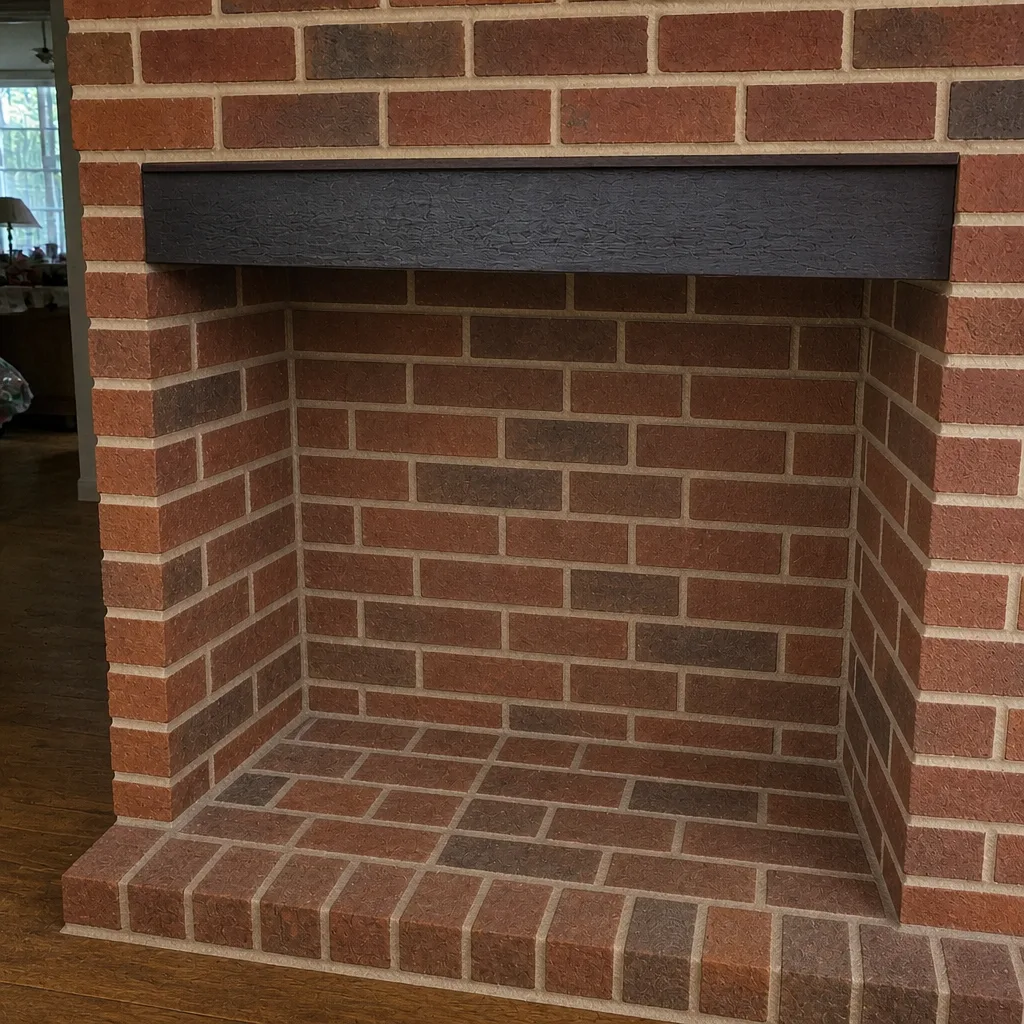
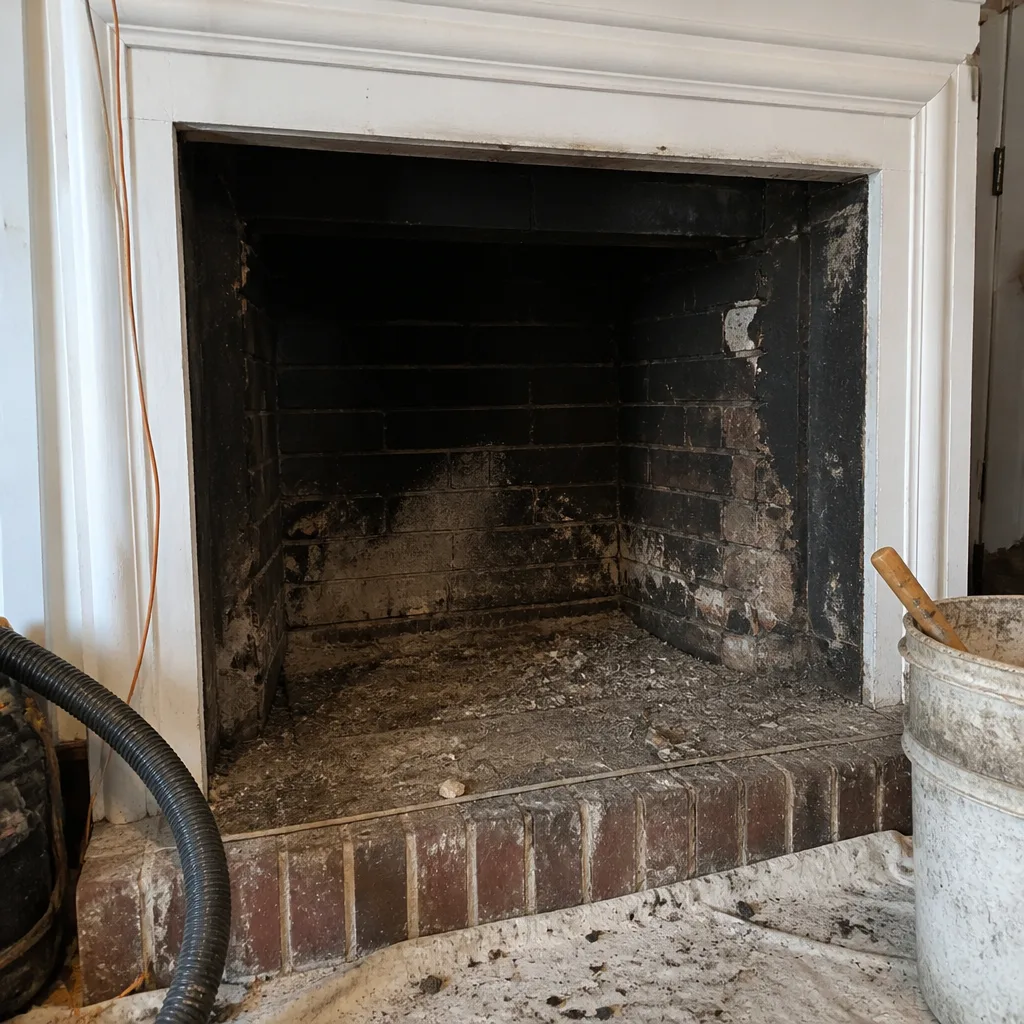
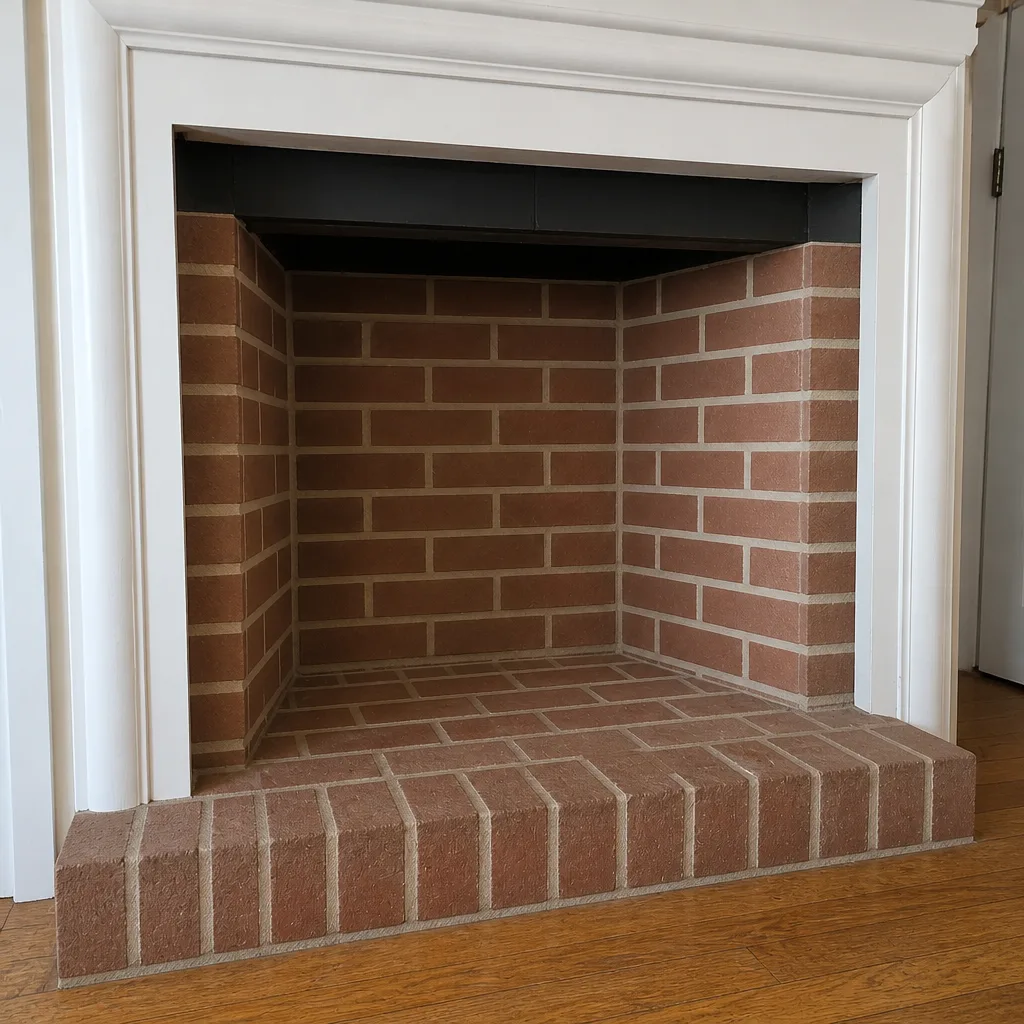
See the difference
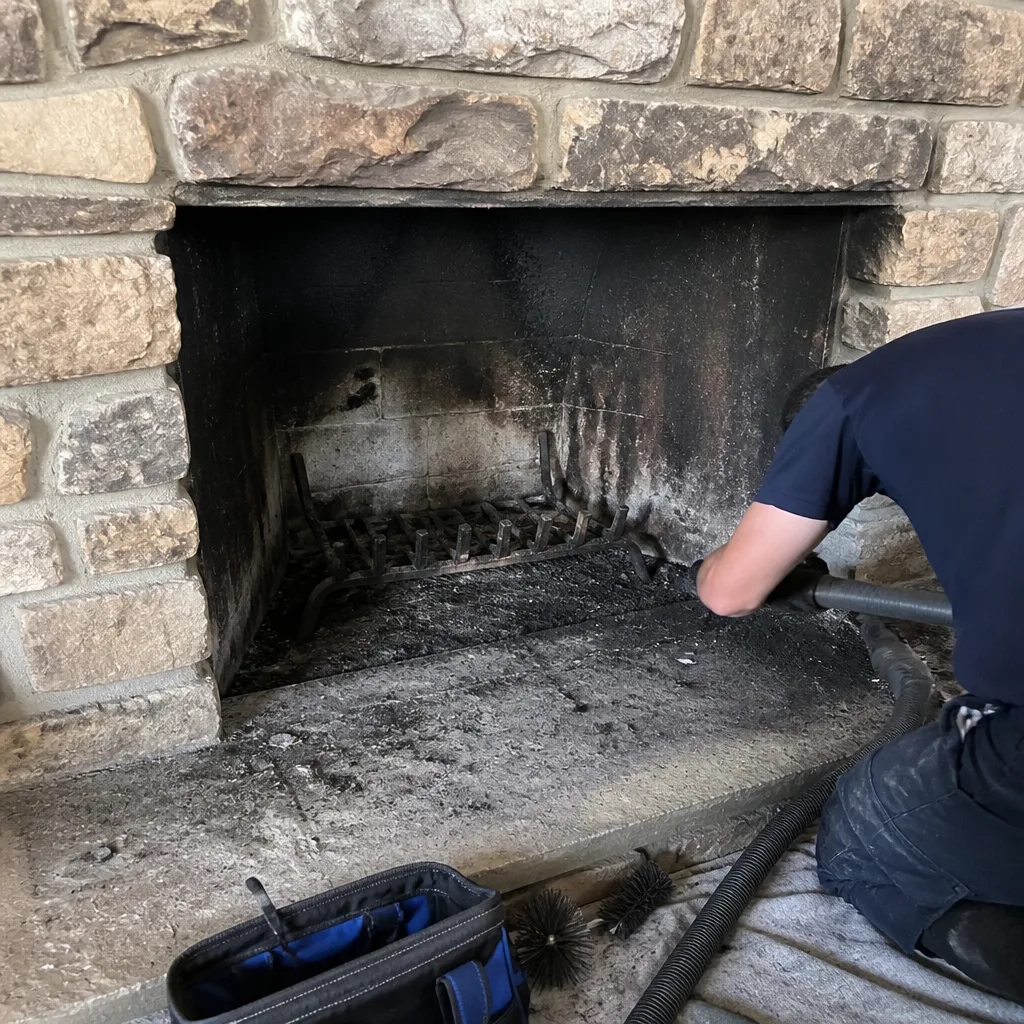 Before
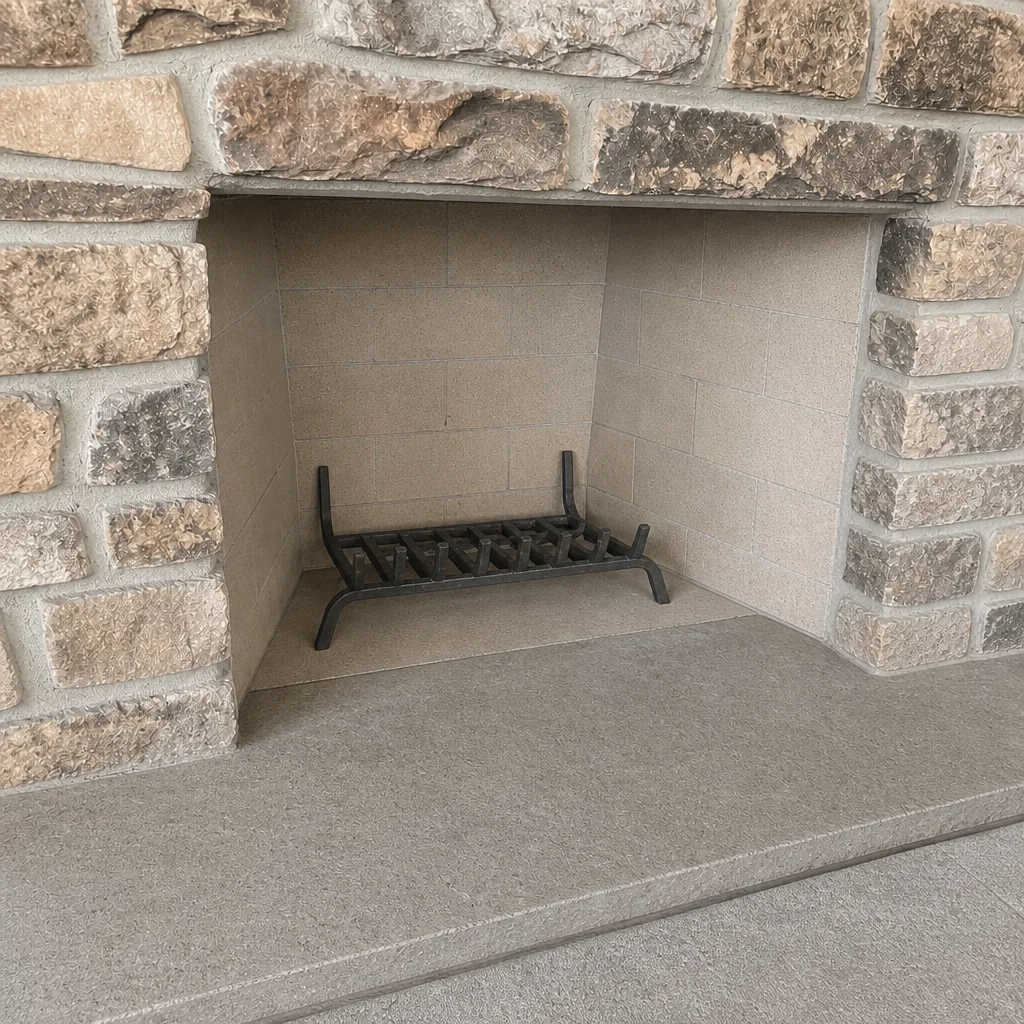 After
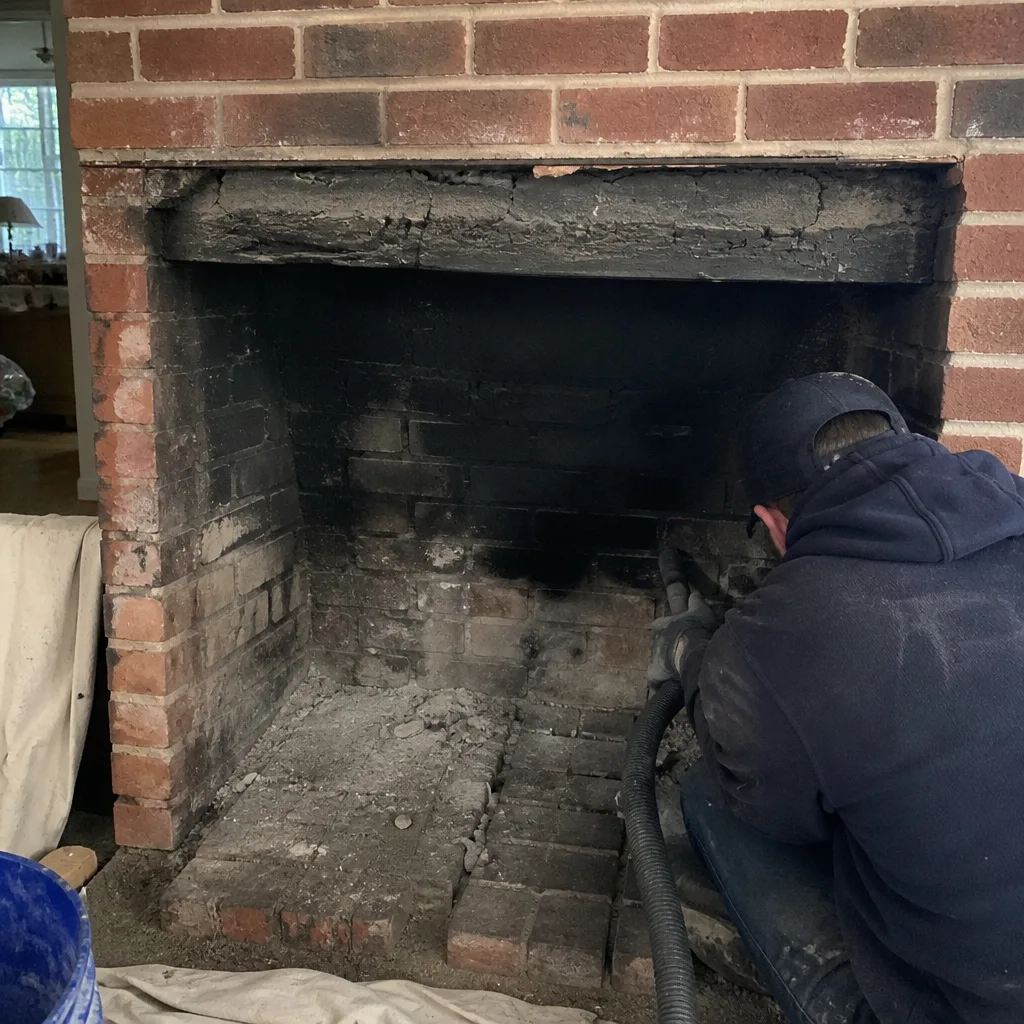 Before
 After
 Before
 After
When to Call a Professional
Call before you clean if any of these apply: your home is older with an unlined or offset flue, you’ve never had the chimney camera-inspected, you smell creosote in the house when the fire is burning, the damper sticks or won’t seal, or you’ve seen glaze or dense buildup at the top of the firebox. Call regardless if you burn more than a cord a year or use the fireplace as primary heat in any part of the year. Chimney Sweep Plaza Midwood offers free estimates in Plaza Midwood, and you’ll get a written scope with photos. Call (877) 320-6353. We answer 24/7, with fast dispatch from 7am to 7pm, Sunday through Friday. Our fireplace repair work is booked in the same visit when the camera shows a problem inside the firebox.
Frequently Asked Questions
You can clean an intact, properly lined, standard-dimension flue with a correctly sized brush, and you should still have it camera-inspected afterward. For Plaza Midwood’s older housing stock, especially unlined or offset flues, the cleaning itself is best left to a professional because the wrong brush and the wrong rod technique cause more damage than the soot. Call (877) 320-6353 for an estimate and we’ll tell you honestly which category your chimney is in.
Once you add a correctly sized brush, full-length rods, a HEPA vacuum, containment sheeting, PPE, and disposal containers, a DIY attempt often costs as much as a professional clean plus inspection. Our pricing is set per job by the written estimate, and the estimate is free. Call (877) 320-6353 to get your exact number.
For a regularly used fireplace, annually is the working standard across the trade, and more often if you burn unseasoned wood or use the fireplace as a primary heat source. The annual visit is really sweep plus inspection in one booking. The local pro we connect you with is licensed and insured as their state requires. Call (877) 320-6353 to schedule.
Stage 2 is glazed and hard, and requires rotary cleaning to remove; Stage 3 is dense, fuel-rich, and the primary fuel for a serious chimney fire. Neither is visible from the firebox, and neither is something a homeowner should try to remove with a hand brush. Video inspection identifies which stage you’re dealing with. Call (877) 320-6353 for a camera inspection.
Not with a camera on the flue. Our recommendations are tied to footage you can see and photos you keep, and we say plainly when a repair can safely wait. Nothing gets recommended without evidence you can review. Call (877) 320-6353 and ask us to walk you through the inspection findings before any work is booked.
An unlined flue can be relined with a flexible stainless liner system, and we install DuraFlex systems for this exact job. The liner restores a safe, code-compliant barrier between creosote and the surrounding structure without a full chimney rebuild. Whether your flue qualifies is a video-inspection question. Call (877) 320-6353 for a free estimate.
The Bottom Line
A homeowner can physically brush a flue, but brushing isn’t the same as cleaning, and cleaning isn’t the same as knowing your chimney is safe. The safe homeowner scope is ash removal, cap and screen clearing, damper checks, and exterior sight lines. Everything past that requires rotary tools, HEPA containment, and most of all a camera that shows what the brush can’t. In Plaza Midwood’s older housing stock, where unlined and offset flues are common, the wrong brush costs more than the right service call. Get the inspection, see the footage, then decide what’s next. The estimate is free, and it starts with a call.
Call (877) 320-6353. We answer 24/7. Fast dispatch from 7am to 7pm, Sunday through Friday. Visit Chimney Sweep Plaza Midwood to book.
Written by the team at Chimney Sweep Plaza Midwood.