
Last updated November 24, 2026
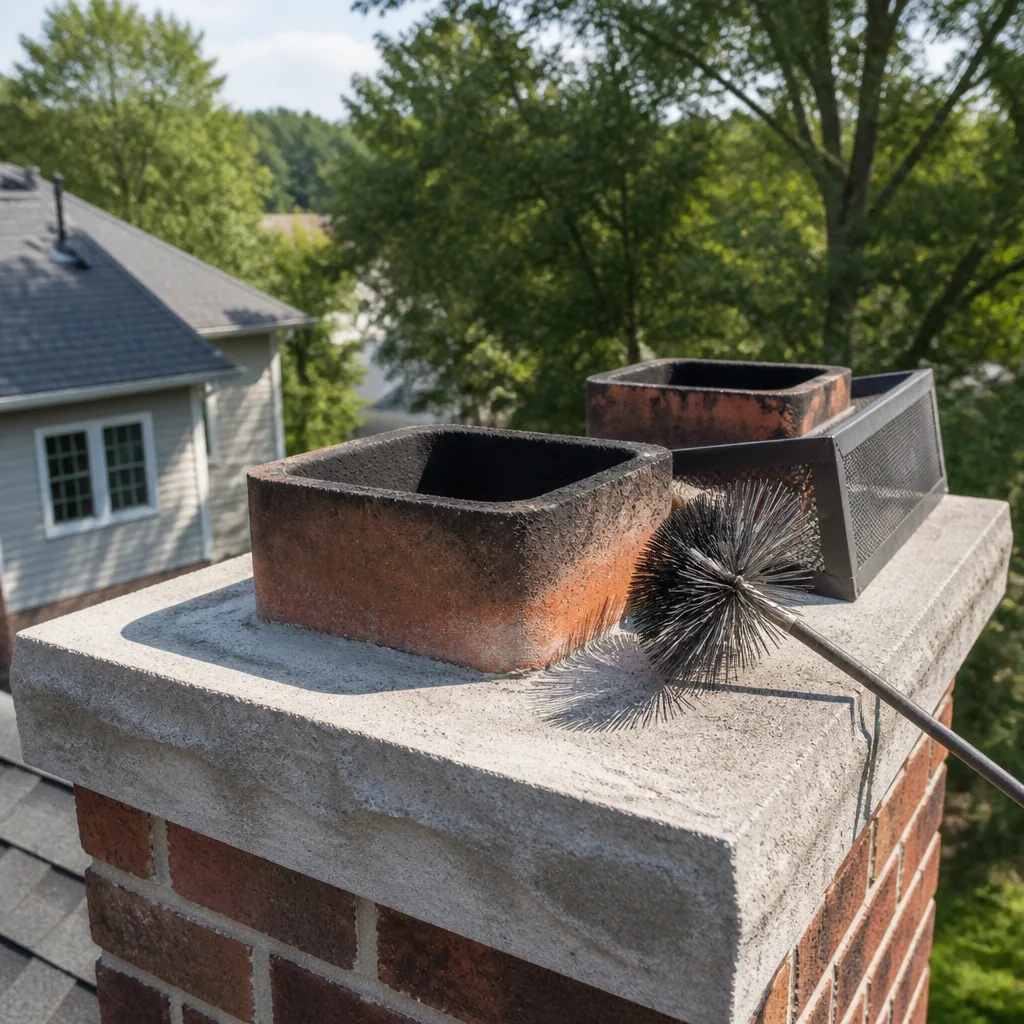 Sweep & inspection
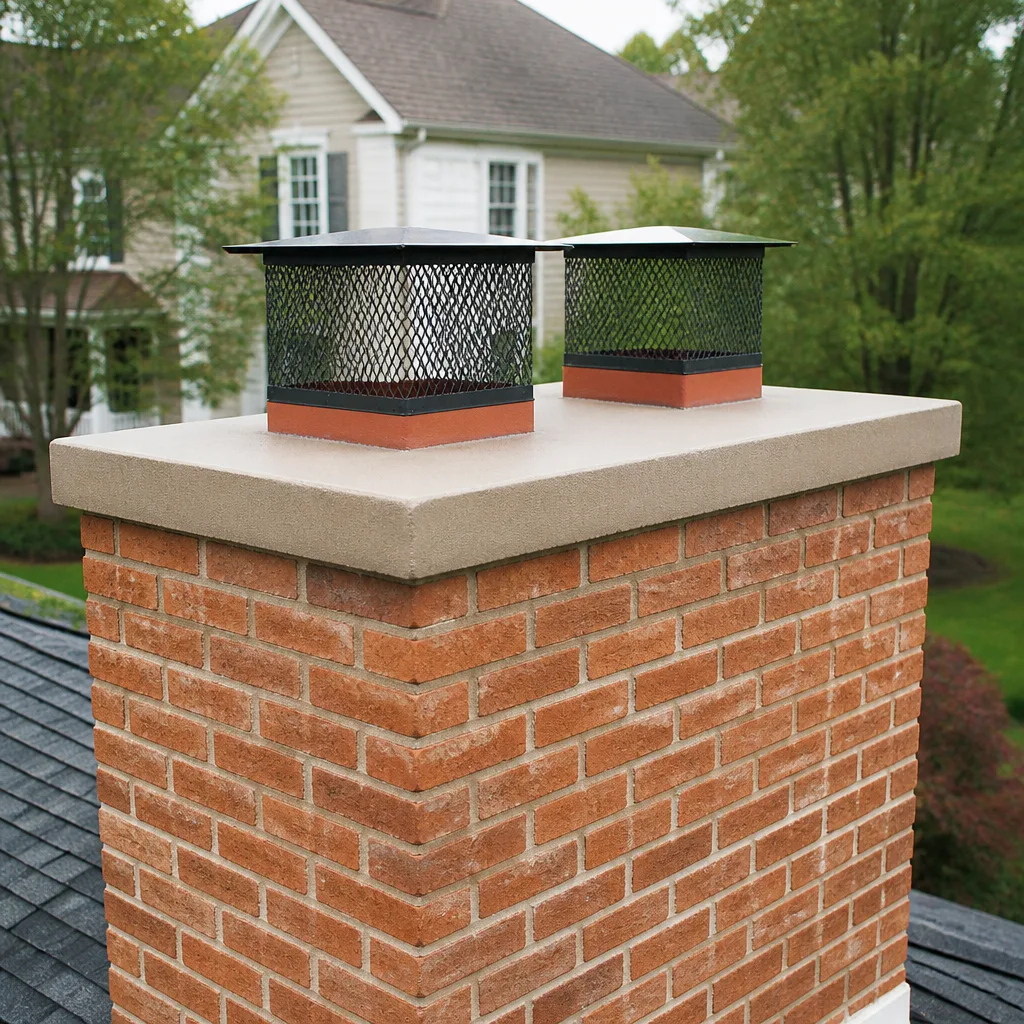 Caps & crowns
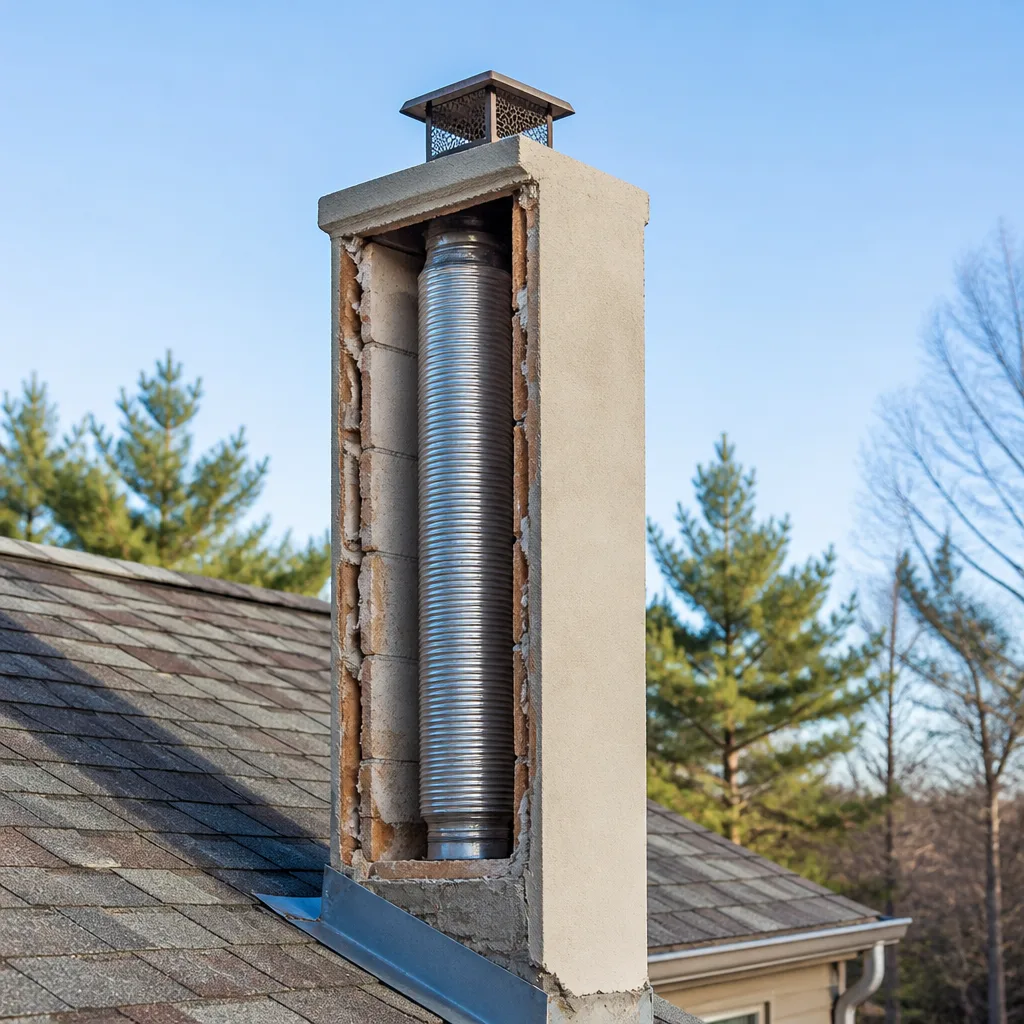 Flue relining
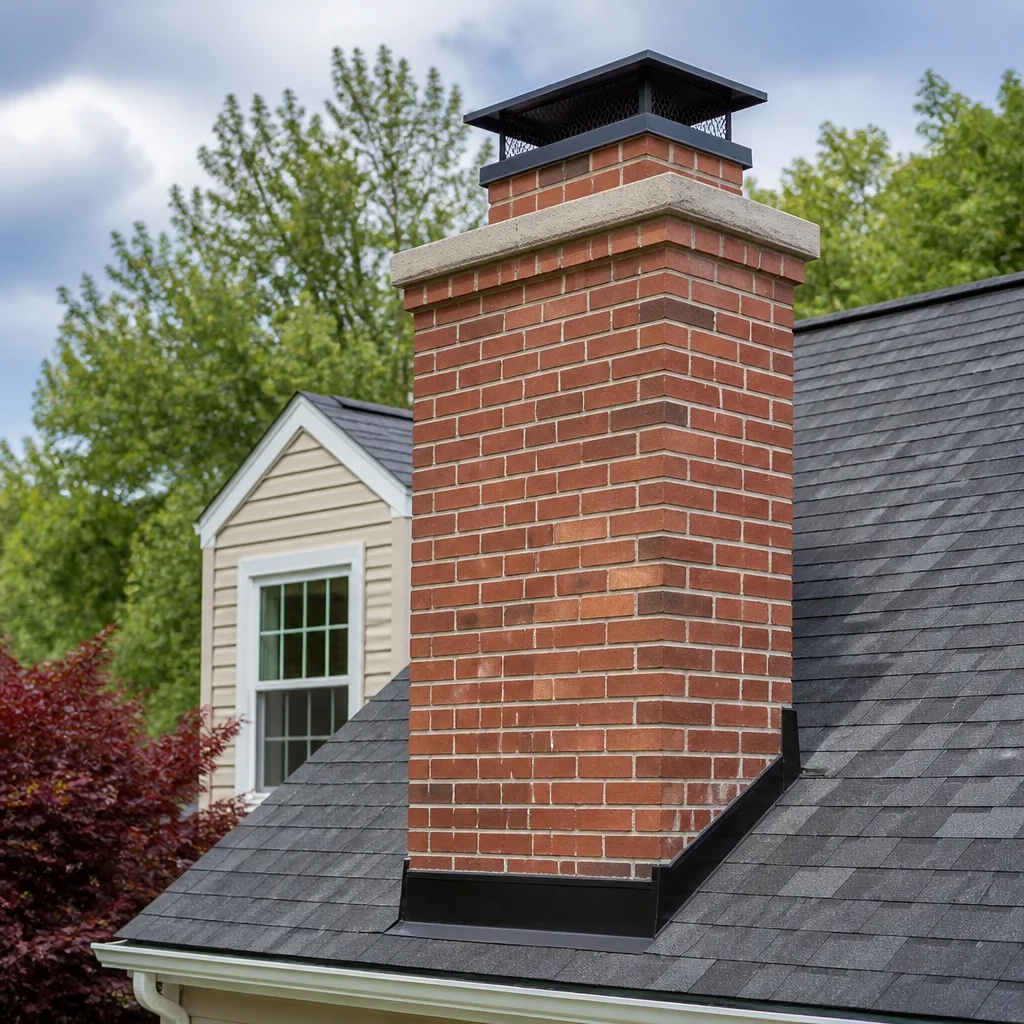 Masonry repair
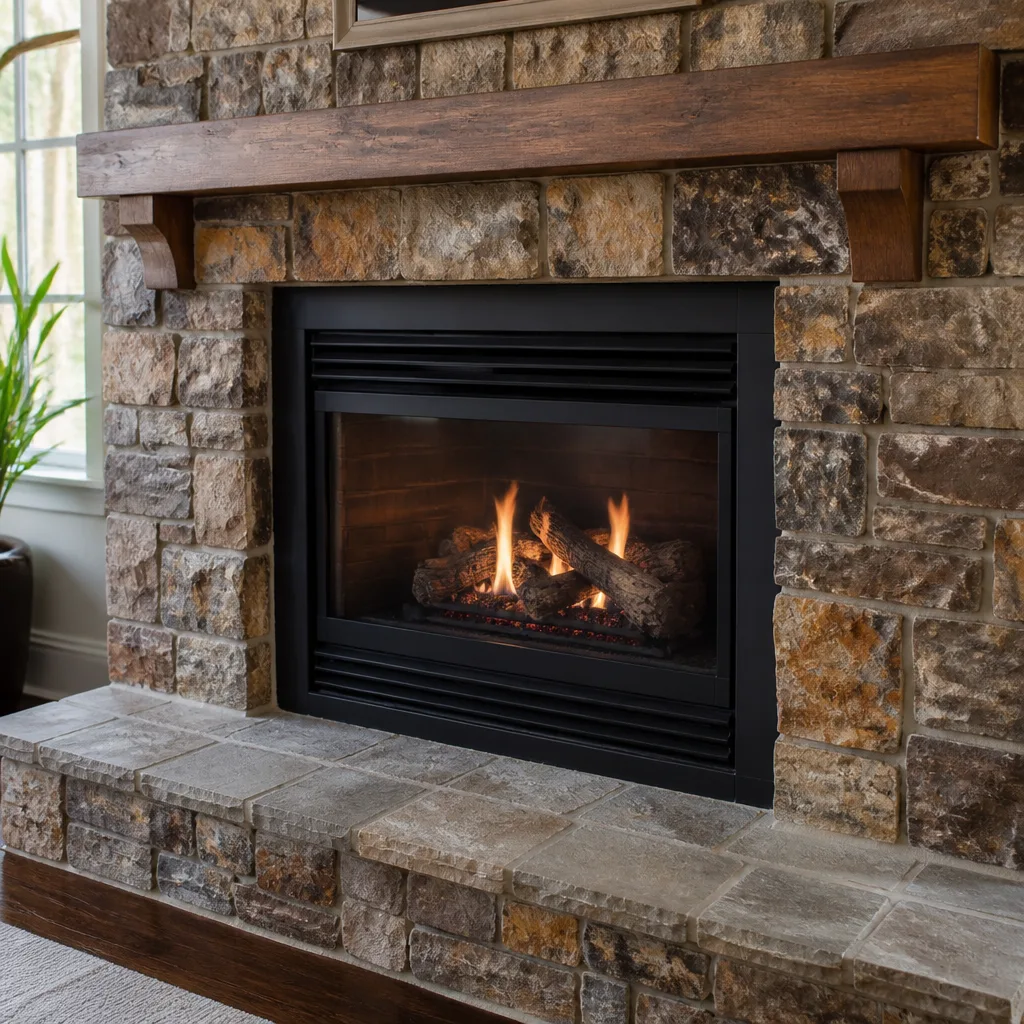 Gas fireplace service
Level 1 sweep and inspection to the NFPA 211 annual standard - flue, crown, cap, and flashing checked and photographed
Chimney sweep logs do not sweep chimneys. They loosen some creosote - which then falls where a brush and vacuum still have to collect it.
The Complete Guide to Chimney Cleaning in Plaza Midwood
Most chimney fires don’t start in heavily used fireplaces. They start in chimneys that were used only a few times a season, where low-temperature burns deposit sticky Stage 2 creosote that a standard brush passes right over. That single fact changes how chimney cleaning in Plaza Midwood should be approached. This neighborhood’s mix of mid-century brick bungalows, wood-burning inserts, and humid Carolina summers creates creosote and moisture conditions a generic sweep checklist won’t catch. In this guide, we map every component from the firebox floor to the chimney crown, explain what a full-system clean actually involves, and show you what to check before you book anyone.
Quick Answer
A proper chimney cleaning in Plaza Midwood goes far beyond brushing soot. It means removing creosote at whatever stage it has reached, inspecting the full flue assembly from firebox to crown, and confirming the liner, damper, and cap are sound. That work takes a rotary or chemical method matched to the creosote stage, plus a Level 1 inspection done during the same visit, so nothing structural goes unnoticed.
Styles & brands we work with
- Sweep & inspection
- Caps & crowns
- Flue relining
- Masonry repair
- Gas fireplace service
Table of Contents
- Why Chimney Cleaning Matters More Than You Think in Plaza Midwood
- How Plaza Midwood’s Housing Stock Changes Creosote Buildup
- The Three Stages of Creosote and Which Cleaning Method Fits Each
- Why a Cleaning Without a Level 1 Inspection Misses Real Damage
- A Component-by-Component Breakdown, Firebox to Crown
- Contractor-Grade Tools Versus Consumer Brushes
- What a Full-System Cleaning Actually Involves
- Common Mistakes to Avoid
Why Chimney Cleaning Matters More Than You Think in Plaza Midwood
A chimney is the only part of a house that quietly turns fuel residue into a flammable coating. Wood smoke carries unburned gases that condense on the cooler surfaces of the flue. Those deposits harden over time, and hardened creosote is what ignites when a hot load of wood sends a flame or ember up the flue. The risk climbs fastest in chimneys that burn low and slow, because cool flue temperatures are exactly what leave the most residue behind.
Here in Plaza Midwood, plenty of fireplaces fall into that low-and-slow category. People light a small fire on a cool evening, damp the air down, and let it smolder for hours. That pattern is common in older homes that still use a wood-burning insert rather than an open hearth. The deposit left behind is denser and more tar-like than the powdery soot a frequent, hot-burning fireplace produces.
Carbon monoxide is the other reason a chimney needs a clear flue. A partially blocked or cracked flue can let combustion gases spill back into living space instead of drawing up and out. You cannot smell carbon monoxide and you cannot see it, so the only reliable safeguard is an unobstructed flue and a liner that is intact. Every cleaning we arrange for homeowners in Plaza Midwood is treated as a chance to confirm both.
Cleaning also protects the chimney itself. Soot and creosote are acidic, and when they sit against masonry they slowly eat into mortar joints and brick faces. Water gets in through a failed cap and combines with those deposits to speed the decay. A clean flue and a dry flue are very close to the same goal, which is why we treat sweeping and weatherproofing as parts of one job rather than separate errands you get around to eventually.
How Plaza Midwood’s Housing Stock Changes Creosote Buildup
Plaza Midwood has a deep inventory of homes built before 1980, and a lot of them share the same basic chimney construction: solid brick masonry, a clay tile liner, and a firebox built from firebrick. That construction has real advantages. Brick masonry holds heat, and clay tile has decades of service life when it stays dry and free of cracks. But it also behaves differently from the prefabricated metal fireplaces that went into subdivisions built later.
Masonry chimneys run cooler on the outside surface, especially on the exterior wall of a home. A thick brick stack on a cold night draws heat out of the smoke before it reaches the top, and the gases condense on the flue walls instead of carrying out. Older clay liners also tend to have small gaps at the joints between tiles. Those gaps are normal in a masonry chimney, but once a gap opens up, creosote finds it and the joint begins to collect material a smooth run of pipe never would.
The Carolina summer plays into it too. Long humid stretches keep the interior of a chimney damp for weeks at a time. Damp masonry and moist soot create conditions where deposits stay sticky and corrosive rather than drying to a crisp that brushes off clean. By the time the heating season returns, the residue that built up last winter may have set harder than it was, and that changes which cleaning method applies.
The practical takeaway for a Plaza Midwood homeowner: don’t compare your chimney to a neighbor’s newer prefab fireplace. A pre-1980 masonry chimney needs its liner checked for joint gaps and its crown checked for cracks, not just a brush down the flue. Our technicians have up to 15 years of experience, and the pattern they look for in older Plaza Midwood homes is specific: failed mortar at the crown, cracked tiles at the flue shoulder, and a damper that no longer seats.
The Three Stages of Creosote and Which Cleaning Method Fits Each
Creosote doesn’t arrive all at once. It progresses through stages, and each stage calls for a different removal method. Sweeping a Stage 3 chimney with a standard brush does almost nothing but polish the surface of a hard glaze. Here is how the stages break down and which method applies.
- Stage 1 – Soot and flaky creosote. This is a light, dusty layer that looks like black ash. It brushes off easily with a poly brush, and some homeowners can keep it under control with frequent, hot fires. Standard sweeping handles Stage 1 completely.
- Stage 2 – Tar glaze. This stage is sticky, shiny, and dark. It forms from low-temperature burns, and it hardens with age into a crust that a hand brush passes right over. Removing it takes rotary sweeping with a specialized whip head or a chemical treatment applied first to break down the glaze.
- Stage 3 – Hard, glazed creosote. This is the most difficult stage: a dense, fired-on glaze that’s almost like a coating on the flue wall. It may require a rotary head, chemical softening, and occasionally a chain flail on heavy masonry flues, then a second pass after the chemistry has had time to work.
The reason this matters is that low-use chimneys tend to sit at Stage 2 or 3. A fireplace used twenty times a season with the air damper turned down produces far more of the sticky material than a fireplace used every weekend at full burn. That’s the overlooked chimney our opening hook describes, and it’s why we ask homeowners in Plaza Midwood how they burn, not just how often.
Method choice also comes down to flue condition. A rotary head is right for a masonry flue in good shape, but it can damage a failing clay tile or a soft liner. If we find Stage 2 deposits on a compromised liner, we fix the liner first. Chimney Sweep Plaza Midwood works with HeatShield ceramic resurfacing for exactly this kind of situation, restoring a cracked or pitted flue interior without tearing the whole stack down. Restore, then clean. That’s the safer order.
Why a Cleaning Without a Level 1 Inspection Misses Real Damage
A chimney cleaning that stops at clearing soot is only half a service. During the same pass, we run what the trade calls a Level 1 inspection: a visual review of all accessible parts of the fireplace and flue, done alongside the sweep. Skipping it means a homeowner walks away thinking the chimney is safe when three specific problems may be quietly developing.
- Liner cracks. A clay tile can crack at a flue joint or along its length. Small cracks let creosote work into the masonry and, worse, let heat reach the combustibles behind the flue. By the time a crack is visible from inside the firebox, the liner has usually been failing for a while.
- Damper deterioration. A metal damper corrodes over time and stops seating flat. A damper stuck open lets heated air escape all winter, and one stuck shut traps heat and gases. Both conditions are easy to catch while the flue is open and easy to miss during a pure sweep.
- Smoke chamber corbeling failures. The smoke chamber sits above the damper and narrows down toward the flue. Builders shape it with corbeled brick, and that sloped surface collects creosote that a straight brush never reaches. If the corbeled brick has broken or chipped, the slope is uneven and the whole chamber needs resurfacing.
Our approach is to include a camera inspection and a photo report with the work, so you see what the technician sees. If we find a cracked liner or a crumbling smoke chamber, the photos let you verify the finding yourself instead of taking an upsell on faith. That matters in a neighborhood where people have been burned by a sweep telling them the whole chimney needs rebuilding when it doesn’t. Sometimes the honest answer is that the crown has a hairline crack that just needs sealing and the liner is fine. We say so.
A Component-by-Component Breakdown, Firebox to Crown
A chimney is a system, and each part has its own failure pattern. Cleaning and inspecting one part while ignoring the rest is what leaves gaps in the whole picture. Here is how each component fits in with a full-system approach.
Firebox
The firebox is the brick box where the fire burns. In a Plaza Midwood masonry chimney, it’s lined with firebrick and held together with refractory mortar. Cleaning means removing ash and residue from the floor and walls, but the more important job is checking the firebrick for spalling and the mortar joints for gaps. Missing mortar lets heat reach the brick behind the firebrick, and that’s a fire concern.
Smoke Shelf
Just above the firebox there’s a flat ledge called the smoke shelf, and it’s where debris collects. Leaves, soot, and pieces of a failed cap can pile up here and narrow the draft. It’s out of sight from a living-room view of the fireplace, which is why cleaning the shelf is one of the most valuable things a full sweep does.
Damper
The damper is the metal door between the firebox and the smoke chamber. We check that it opens and closes fully, that the plate seats against its frame, and that the linkage hasn’t rusted solid. A stuck damper is a common find in older Plaza Midwood homes, and it’s often why a fireplace smokes into the room.
Flue Liner
The liner is the flue surface itself, clay tile in older homes and often a stainless system in a relined chimney. Our routine is to check every accessible joint and the condition of the tile faces. When a liner needs replacing, we install DuraFlex flexible stainless systems, and when it can be restored, HeatShield ceramic resurfacing rebuilds the interior surface without demolition.
Smoke Chamber
The smoke chamber is the transition space above the damper, corbeled down to the flue. It collects creosote on its sloped walls. A cleaning here means scraping and brushing the corbeling, and an inspection checks whether the brick and mortar are still sound.
Crown
The crown is the concrete cap at the top of the stack that sheds water away from the chimney. A cracked or shrinking crown lets rainwater into the masonry, and wet masonry is the beginning of most chimney decay. chimney cap & crown work is where a lot of jobs finish, because a clean flue deserves a dry top.
Chimney Cap
The cap is the cover over the flue opening. A well-fitted cap keeps rain, leaves, and animals out. We fit Famco and Gelco caps to the specific flue dimensions rather than forcing a generic cover into place.
Contractor-Grade Tools Versus Consumer Brushes
The tool you clean with determines what actually comes off the flue wall. A consumer brush on a flexible rod is fine for Stage 1 soot in a small flue. It’s not enough for a Plaza Midwood chimney with Stage 2 tar glaze or a corbeled smoke chamber. Here’s where the equipment differs.
- Rotary cleaning systems spin a whip or brush head on a powered rod. The centrifugal force scrapes glaze off the flue wall in a way a hand brush can’t. Rotary heads come in different stiffnesses, and matching the head to the liner material is what prevents damage.
- Chain flails are a heavier rotary attachment for hard masonry flues. They remove Stage 3 glaze from clay tile, but they’re never appropriate for a soft or failing liner. Choosing the wrong head here is how a cleaning turns into a repair.
- Chemical treatments soften stubborn creosote before the mechanical pass. Applied correctly, they break the glaze down so the rotary head can lift it, and they’re often the right call for a low-use chimney that has set hard over a humid summer.
- Camera inspection tools let a technician see the full run of the flue and photograph what they find. That’s what turns an inspection into evidence you can review.
Big-box equipment stops at the consumer tier. Box stores sell the poly brush and rods, not the powered rotary heads, the chemical treatments, or the camera rigs. That gap is why a bargain sweep can look complete and still leave the harder deposits in place. We specify the method to the deposit and the liner, not the other way around. The same discipline carries into the repair side: when a flue needs a new liner system, we work with DuraFlex, Olympia Chimney, HeatShield, Gelco, and Famco because each covers a different job, and we pick the one the chimney actually needs.
What a Full-System Cleaning Actually Involves
Every full-system cleaning we arrange follows the same sequence, so nothing gets skipped. The steps below describe how the visit goes from arrival to sign-off.
- Set up protection. Drop cloths go down around the hearth, and a sealed vacuum runs throughout the work so no soot reaches the room.
- Assess the fireplace. Before any brush goes in, the technician checks how the fireplace has been burning and looks at the firebox, damper, and smoke shelf for obvious issues.
- Run the camera inspection. A camera goes up the flue to record the liner, the smoke chamber, and the top of the stack. Photos are saved to share with you.
- Choose the method. The stage of creosote and the condition of the liner decide whether the sweep uses a poly brush, a rotary head, a chain flail, or a chemical treatment first.
- Clean firebox to crown. The sweep works from the firebox floor up through the smoke shelf, damper, smoke chamber, and flue, removing deposits at each level. A cap check happens at the top.
- Review and report. You get the photo report and a plain explanation of what’s sound, what needs attention now, and what can safely wait.
Because one diagnostic visit can cover the sweep and any repair or weatherproofing need it turns up, a homeowner doesn’t have to line up multiple contractors. If the inspection shows a worn damper, we handle that as fireplace repair. If the flue needs relining, that’s a liner job under the same roof. One visit, full picture: that’s the point of running the whole system through one accountable provider.
Inspecting and cleaning also stays within the industry’s own standards. Nothing is recommended without camera evidence you can see, and the standard practice is to restore or replace only what the photos show. A safe chimney in Plaza Midwood depends on the full sequence, not on one pass of a brush.
What Actually Happens If You Skip It
Skipping cleaning doesn’t cause instant failure. It causes quiet accumulation, and then a specific risk that compounds each season you wait. The three consequences to know are creosote ignition, a blocked flue, and structural decay.
Creosote ignition is the one homeowners hear about. When a hot fire sends a spark up a flue coated with Stage 2 or 3 deposits, the glaze itself can catch and burn hot and fast. Chimney fires are sometimes loud and sometimes not; a small one can go out on its own and leave a cracked tile behind as its only evidence. The liner damage from a fire is often invisible from the firebox until it has widened.
A blocked flue is the carbon monoxide concern. A failed cap lets animals build nests in the flue or drop debris onto the smoke shelf. Once the passage narrows, combustion gases have nowhere to go but back into the room. You can’t see or smell that, which is why checking the flue opening is part of every cleaning.
Structural decay is the slow one. Wet masonry from a cracked crown combined with acidic soot slowly breaks down the brick and mortar. Left alone through a few humid Carolina summers, a small crown crack can turn into mortar failure and a flue that needs real repair. The answer to “what actually happens if I skip it” is not always dramatic. Sometimes the answer is that a $200 cleaning turns into a larger masonry repair because the small leak above it never got caught. If you want to know where your chimney stands, chimney sweep work done with an inspection is how you find out before it’s a bigger job.
Common Mistakes to Avoid
- Sweeping without inspecting. A clean flue says nothing about liner condition or crown cracks. What comes off the wall matters less than what a camera finds inside it.
- Hiring a sweep whose only tool is a brush. A brush handles Stage 1 soot. It won’t touch the Stage 2 glaze that low-use fireplaces in older Plaza Midwood homes tend to produce.
- Assuming prefab and masonry are the same job. A pre-1980 masonry chimney has clay tile joints and corbeled brick that a prefab fireplace doesn’t, and each needs the right method.
- Waiting for a problem to appear before booking. Most chimney damage in Plaza Midwood develops out of sight. Clearing the flue once a year and checking the crown catches it while it’s still small.
- Letting a generic cap or cover sit loose on the flue. A cap that doesn’t fit the flue opening lets water and animals in and can fall onto the smoke shelf. It needs to match the flue’s dimensions.
- Forcing a reline when a restoration would do. Not every tired flue needs full demolition. Ceramic resurfacing can restore a liner that’s sound but worn.
- Ignoring how you burn. Damping fires down to smolder through a damp evening is the fastest route to sticky creosote. A hot, clean fire leaves far less behind.
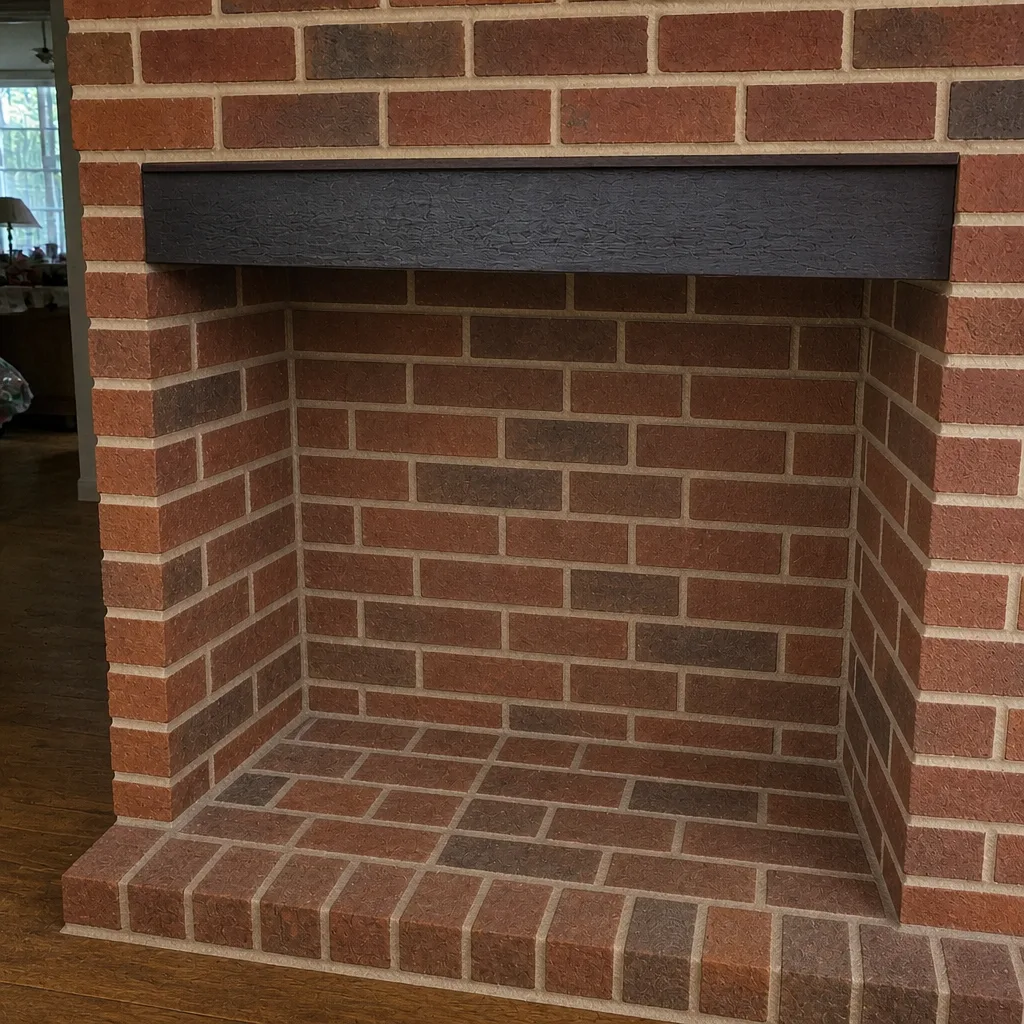
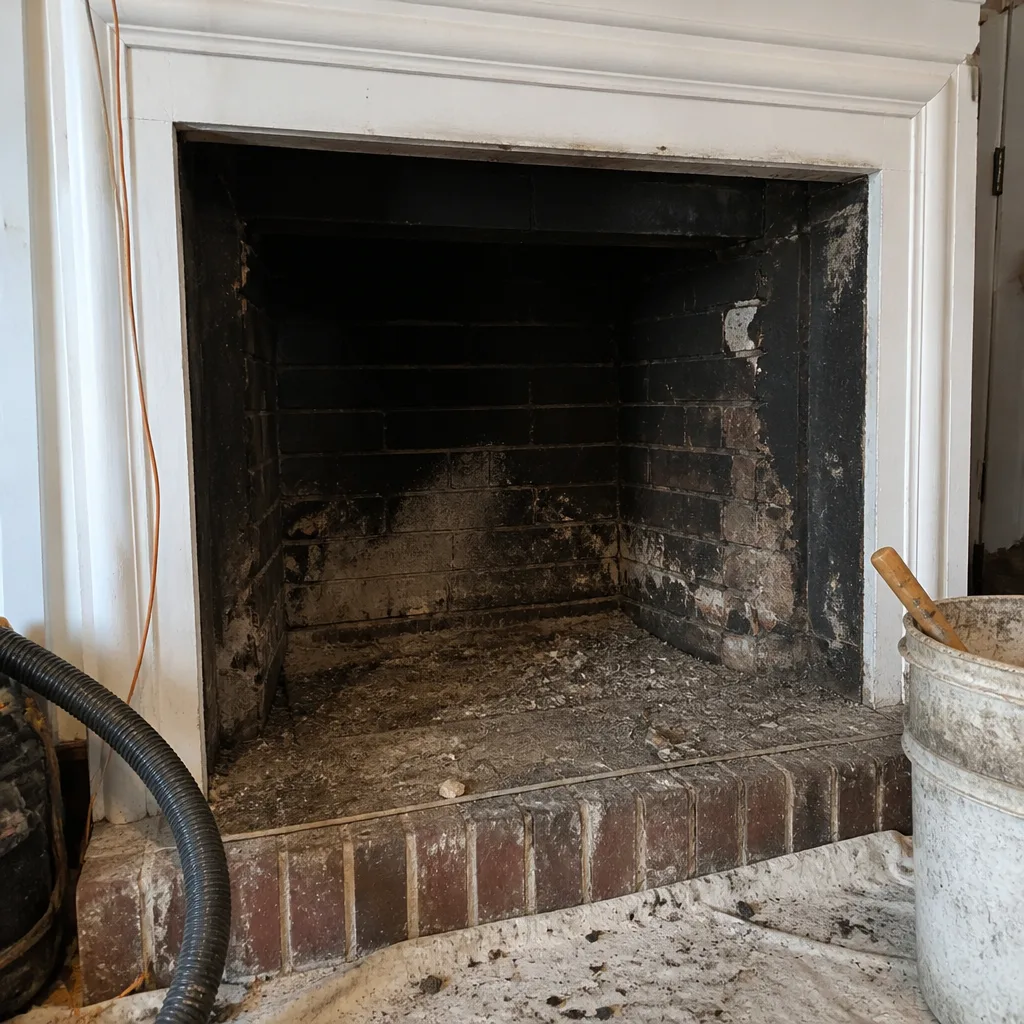
See the difference
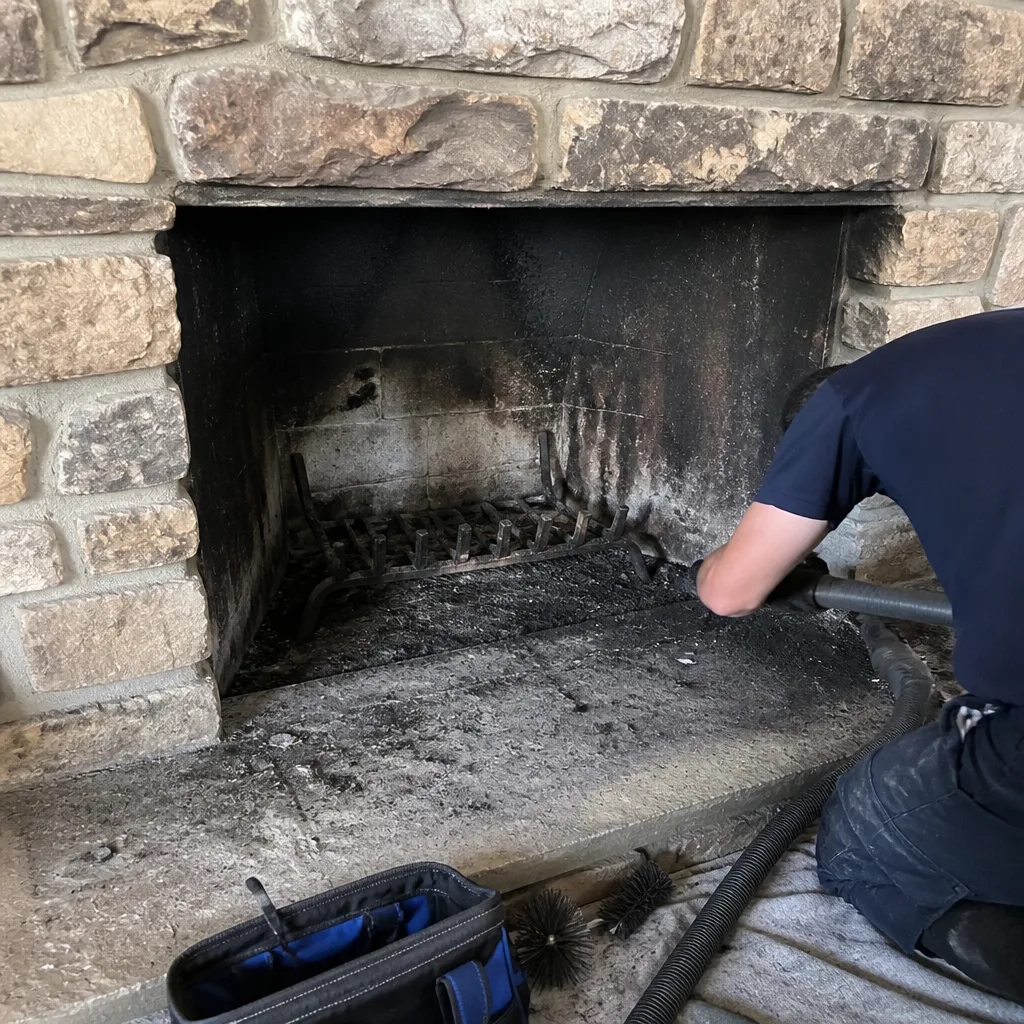 Before
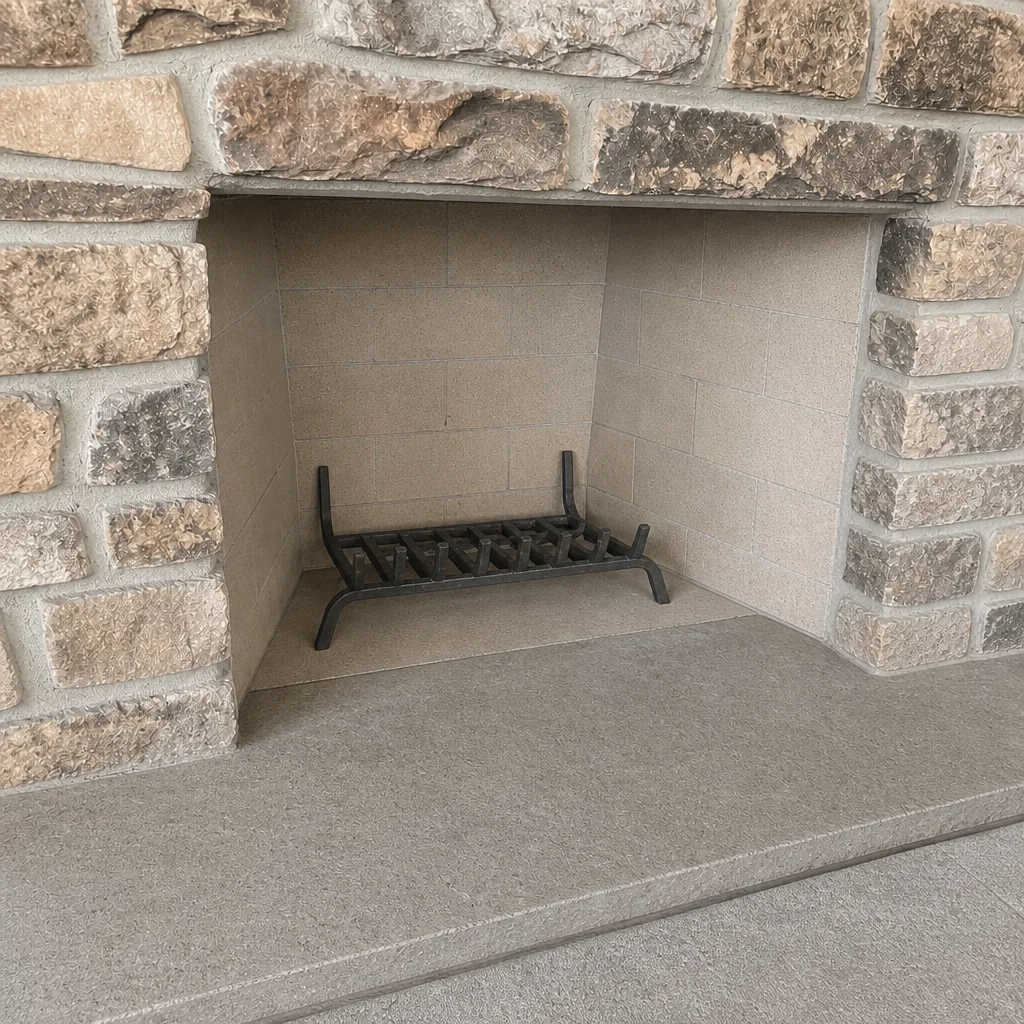 After
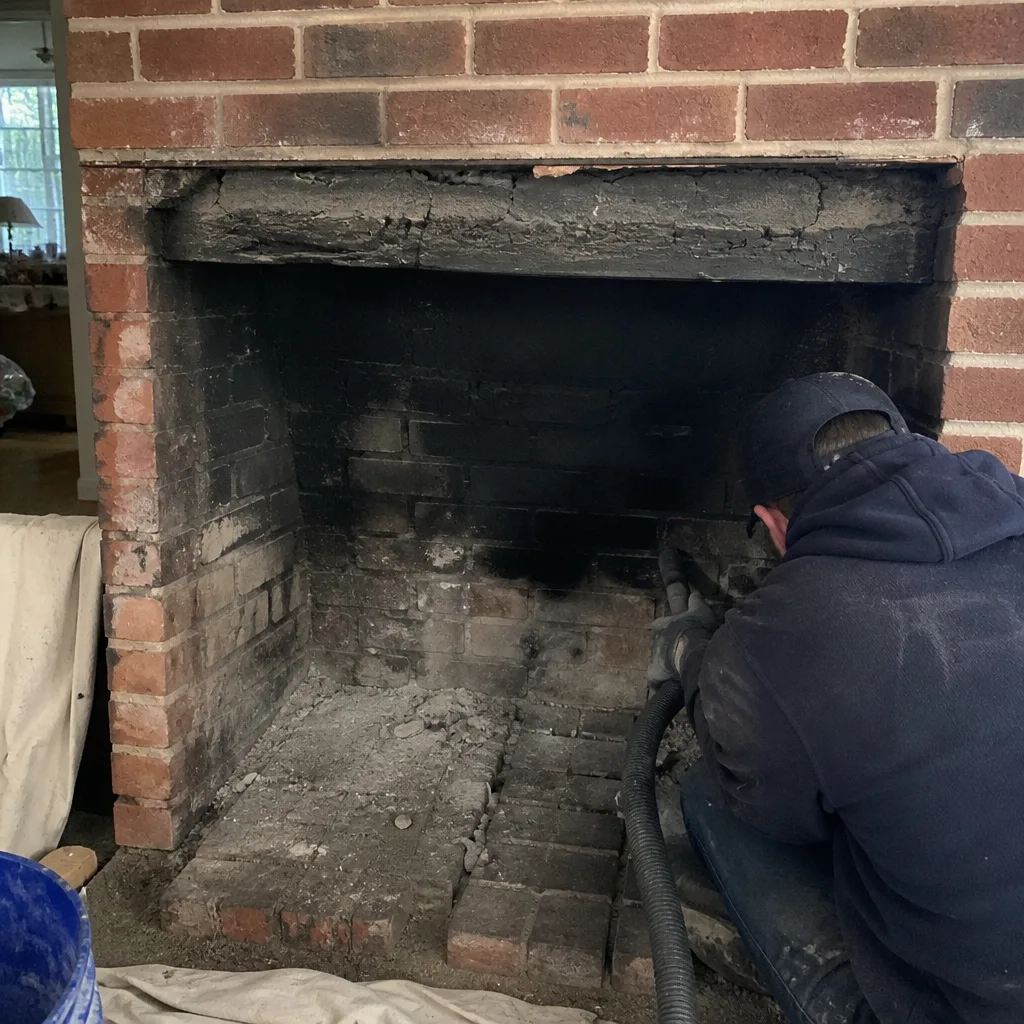 Before
 After
 Before
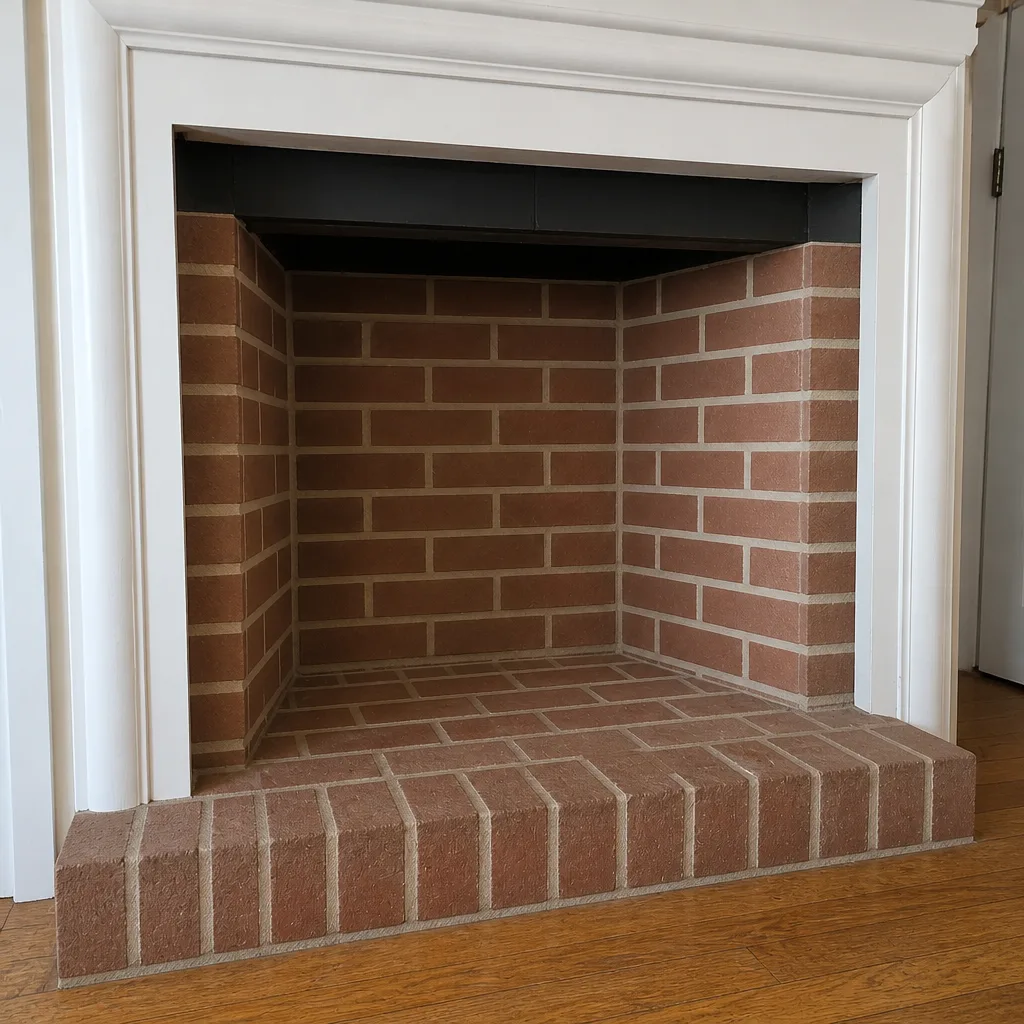 After
When to Call a Professional
Some things a homeowner can handle: checking the chimney cap is seated, keeping the firebox clear of ash, and confirming the damper moves freely. Everything past that belongs to a trained professional. You should call us when you’ve had a chimney fire, even a small one, because liner damage often isn’t visible from the firebox. You should call when a fireplace smokes into the room, when you smell a sharp, tar-like odor on warm days, when you haven’t had the flue cleaned in a year or more, or when you’ve never had a camera inspection of the liner. If the crown is cracked or the cap is missing, that’s a call too. High-tension hardware, gas lines, and electrical components are never DIY territory, and neither is a fail point in the flue itself. Chimney Sweep Plaza Midwood offers free estimates in Plaza Midwood. Call (877) 320-6353. We answer 24/7. Fast dispatch from 7am to 7pm, Sunday through Friday.
Frequently Asked Questions
A standard chimney cleaning in Plaza Midwood typically runs in the low hundreds of dollars, and any liner or cap work adds to that when the inspection finds it’s needed. The estimate is free, and the written estimate sets the final price, so you know the number before any work starts. Call (877) 320-6353 for an exact quote; estimates are free.
Most chimneys used for wood fires benefit from a cleaning once a year, and a low-use fireplace may need it checked even more carefully. The right interval depends on how you burn, not only how often. If you have questions about Plaza Midwood’s older masonry chimneys specifically, call (877) 320-6353 for an exact quote; estimates are free.
Sticky creosote is Stage 2, and it forms when fires burn cool and smolder rather than burning hot. That pattern is common in older Plaza Midwood homes where a fire is damped down for a long, low evening. It takes rotary or chemical cleaning, not a standard brush, to remove it.
Sometimes the liner can be restored instead of replaced, and ceramic resurfacing is the method for that. A cracked or pitted clay liner can often be resurfaced when the surrounding structure is still sound, and only a badly failed liner needs a full stainless reline. We only recommend it when the camera shows it, so call (877) 320-6353 for an exact quote; estimates are free.
Skipping a cleaning lets creosote build up in stages until a hot fire can ignite it, and it lets a cracked crown or failed cap stay unnoticed. The immediate risk is a chimney fire, and the slow risk is wet masonry breaking down over a few Carolina summers. The safe answer is to have it cleaned and inspected once a year, and call (877) 320-6353 for an exact quote; estimates are free.
Often, yes. A single diagnostic visit can cover the sweep, the camera inspection, and any cap or damper repair that turns up, so you don’t have to line up separate contractors. Larger liner work may be scheduled after the inspection report, but the visit gives you the full picture. Call (877) 320-6353 for an exact quote; estimates are free.
The Bottom Line
Chimney cleaning in Plaza Midwood is a full-system job, not a brush down the flue. The stages of creosote, the age and construction of a pre-1980 masonry chimney, and the humidity of a Carolina summer all change what a proper cleaning involves. A complete service cleans every component from firebox floor to crown, runs a camera inspection during the same visit, and shows you the photos before anyone recommends repair. Trust the evidence, not a sales pitch. If a chimney is sound, we say so and tell you what can safely wait. When you’re ready for a free estimate, call (877) 320-6353. We answer 24/7. Fast dispatch from 7am to 7pm, Sunday through Friday.
Written by the team at Chimney Sweep Plaza Midwood.